
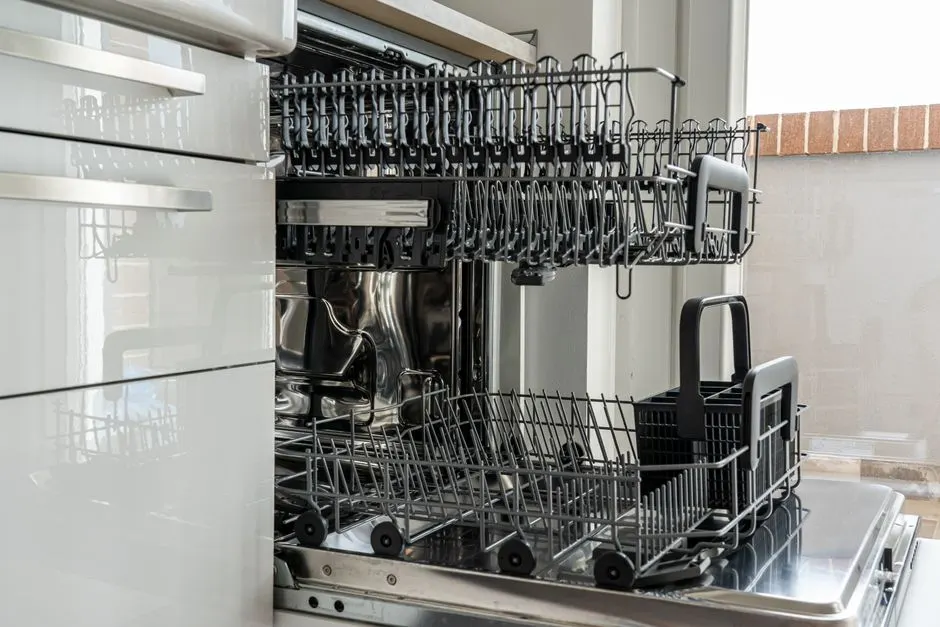
Your dishwasher leaves a white film on dishes because minerals in your water - mostly calcium and magnesium - are drying onto the glass and plastic instead of rinsing away. The second most common cause is too much or the wrong type of detergent, which leaves a chalky residue that looks identical. That film is not a sign your dishwasher is dying, but it is a sign something in your water, detergent, or rinse cycle is out of balance.
The short answer: what that white film actually is
Dishwasher white film is a mineral or detergent residue that bonds to dishes during the rinse and dry cycle when water chemistry is off. In most homes it is a thin layer of calcium carbonate, the same stuff that scales up a kettle. On plastic it looks cloudy; on glass it can look almost etched. Run a fingernail across a dry glass - if the film scratches off, it's residue. If the glass feels permanently rough, the surface may already be etched, and that's a different problem.
Hard water is the leading cause across most of the country, and Kenosha is no exception. The provider's municipal water runs moderately hard, and homes on private wells in the surrounding townships can be considerably harder. That mineral load is why so many local dishwashers need a rinse aid just to keep glassware clear.
Why is my dishwasher leaving a white film in Kenosha, Wisconsin?
In Kenosha, Wisconsin, the white film is almost always a hard-water or detergent-dosing issue rather than a mechanical failure. Water hardness here typically falls in the 7 to 10 grains-per-gallon range, which is enough to leave visible spotting without a rinse aid. Well water on the edges of the county can push past 15 grains per gallon, and at that level even good detergent struggles.
There's a seasonal wrinkle too. Late fall and winter, when the supply shifts and homes run the heat constantly, local providers get a spike in calls about cloudy glasses and chalky coffee mugs. The water isn't dramatically different - the drying conditions are. Dishes that come out of a hot dishwasher into dry winter air flash-dry faster, and minerals that would have stayed in suspension get baked onto the surface.
If you're noticing the film alongside other symptoms - dishes still wet, a gritty feel on the interior, or the machine not draining properly - it's worth having the unit looked at rather than guessing. The dishwasher repair in Kenosha, Wisconsin team handles both the water-side diagnosis and the mechanical fixes in one visit.
The five most common causes (and how to test each one)
1. Hard water minerals
This is the number one cause. Calcium and magnesium stay dissolved in the wash water, then precipitate out as the dishes dry. You'll see it most on glass, stainless steel, and anything with a matte finish. Test: fill a glass with tap water, let it evaporate overnight on the counter. A white ring means hard water.
2. Too much detergent
Modern detergents are concentrated. Using a full pod in a lightly soiled load, or filling the cup to the top with powder, leaves undissolved detergent that redeposits on dishes. Test: run an empty cycle with no detergent. If the film disappears, your dose is too high.
3. No rinse aid, or an empty dispenser
Rinse aid changes the surface tension of water so it sheets off instead of drying in droplets. Without it, every droplet leaves a mineral ring. Test: check the dispenser. If it's been empty for weeks, that alone can explain the film.
4. Water temperature too low
Detergent needs water at roughly 120°F to dissolve fully. If your water heater is set lower, or the dishwasher's heating element is failing, detergent stays granular and leaves a film. Test: run the hot tap at the kitchen sink until it's fully hot, then start the dishwasher. If the film improves, temperature is part of the problem.
5. A clogged or failing wash system
Clogged spray arms, a dirty filter, or a failing circulation pump mean dirty water recirculates instead of rinsing clean. You'll usually see food particles alongside the film. Test: pull the bottom rack and inspect the filter and spray arm holes for debris.
How to fix dishwasher white film in Kenosha, Wisconsin
Work through these in order - most Kenosha homeowners solve the problem by step three. Each step is cheap, and each one rules out a cause before you spend money on a repair.
- Add a rinse aid. Fill the dispenser and set it to the middle setting. This alone clears the film in roughly half the homes local providers visit.
- Right-size your detergent. Use a pod for a full load, half a pod or a tablespoon of powder for a light load. Skip the extra pre-wash scoop unless dishes are heavily soiled.
- Run a cleaning cycle. Once a month, run an empty hot cycle with a dishwasher cleaner or a cup of white vinegar on the top rack. This dissolves mineral buildup inside the machine.
- Check your hot water. Confirm your water heater is set to at least 120°F. If it's lower, raise it slightly and retest.
- Clean the filter and spray arms. Remove the bottom filter, rinse it under the tap, and poke a toothpick through the spray arm holes. Do this every two to three months.
If you've done all five and the film persists, the issue is likely mechanical - a failing heating element, a weak circulation pump, or a water inlet valve that isn't letting in enough water. That's when a diagnostic visit pays for itself. Typical 2026 pricing for a dishwasher diagnostic in the Kenosha area runs $89 to $129, and most simple fixes land in the $150 to $280 range including parts.
For homeowners dealing with the same hard-water film across other appliances - cloudy ice, scale in the fridge water line, chalky residue in the washing machine - the refrigerator repair in Kenosha, Wisconsin and washer repair in Kenosha, Wisconsin teams see the same water chemistry at work.
Common mistakes that make the film worse
The most common mistake is adding more detergent when the film appears. That makes it worse, not better - excess detergent is itself a cause of white film. If you've been doubling up on powder, cut back to a normal dose and add rinse aid instead.
Other mistakes:
- Using the wrong cycle. The quick-wash cycle uses less water and shorter rinses, which leaves more residue. Use the normal or heavy cycle for full loads.
- Overloading the racks. Dishes that touch block water from reaching surfaces, so minerals dry in place.
- Skipping the filter. A dirty filter recirculates food and minerals. Clean it every two to three months.
- Ignoring the rinse aid setting. If your dispenser has a dial, turning it up one notch often solves the problem outright.
- Pre-rinsing everything. Modern detergents need some food soil to work. Rinsing dishes clean before loading can leave detergent residue because there's nothing for it to bind to.
One more: don't mix detergent brands mid-load or switch from pods to powder without adjusting the dose. Different formulations dissolve at different rates, and the transition period is when most film complaints start.
When to call a professional
Call a professional when you've corrected water hardness, detergent dose, rinse aid, and filter cleaning, and the film still appears. At that point the cause is inside the machine - a heating element that isn't reaching temperature, a circulation pump that's lost pressure, or a water level that's too low to rinse properly. Those are not DIY fixes, and guessing at them usually costs more than a diagnostic.
Local providers test water temperature at the unit, check the wash pump pressure, inspect the inlet valve, and confirm the rinse aid dispenser is actually releasing. You get a straight answer on whether it's a $12 part or a repair that isn't worth doing. If you're also seeing film or scale in other appliances, the appliance repair service Kenosha Wisconsin covers the whole kitchen and laundry room.
For homes in the older neighborhoods near the lake, where original plumbing and older dishwashers are common, local providers also handle emergency appliance repair in Kenosha, Wisconsin when a unit starts leaking mid-cycle.
Frequently Asked Questions
Why is my dishwasher leaving a white film in Kenosha, Wisconsin?
Hard water is the usual cause in Kenosha, where water runs 7 to 10 grains per gallon. Minerals dry onto dishes during the rinse cycle. Too much detergent and an empty rinse aid dispenser produce the same film. Test with an evaporation glass first.
How much does dishwasher repair cost in Kenosha?
Expect $89 to $129 for a diagnostic and $150 to $280 for most common repairs in 2026. Pump or heating element replacements can run $250 to $400.
Who fixes dishwashers in Kenosha, Wisconsin?
Can I fix dishwasher white film myself in Kenosha?
Elite Appliance Repair is a free referral service. Call (833) 339-2709 and we will connect you with an independent local provider for dishwasher repair in Kenosha. Ask the provider about timing, pricing, and warranty terms before work starts.
Is white film from the dishwasher dangerous in Kenosha, Wisconsin?
No. The film is calcium and magnesium residue or undissolved detergent - not toxic. It affects taste and appearance more than safety. That said, persistent film can indicate a failing heating element, so it's worth diagnosing.
Get help with Appliance Repair in Kenosha
If you've tried rinse aid, adjusted your detergent, and cleaned the filter and the film is still there, give the provider a call. Local providers will diagnose the machine, tell you what's causing it, and fix it in the same visit.
(833) 339-2709 to schedule a dishwasher diagnostic in Kenosha, Wisconsin.